
Research
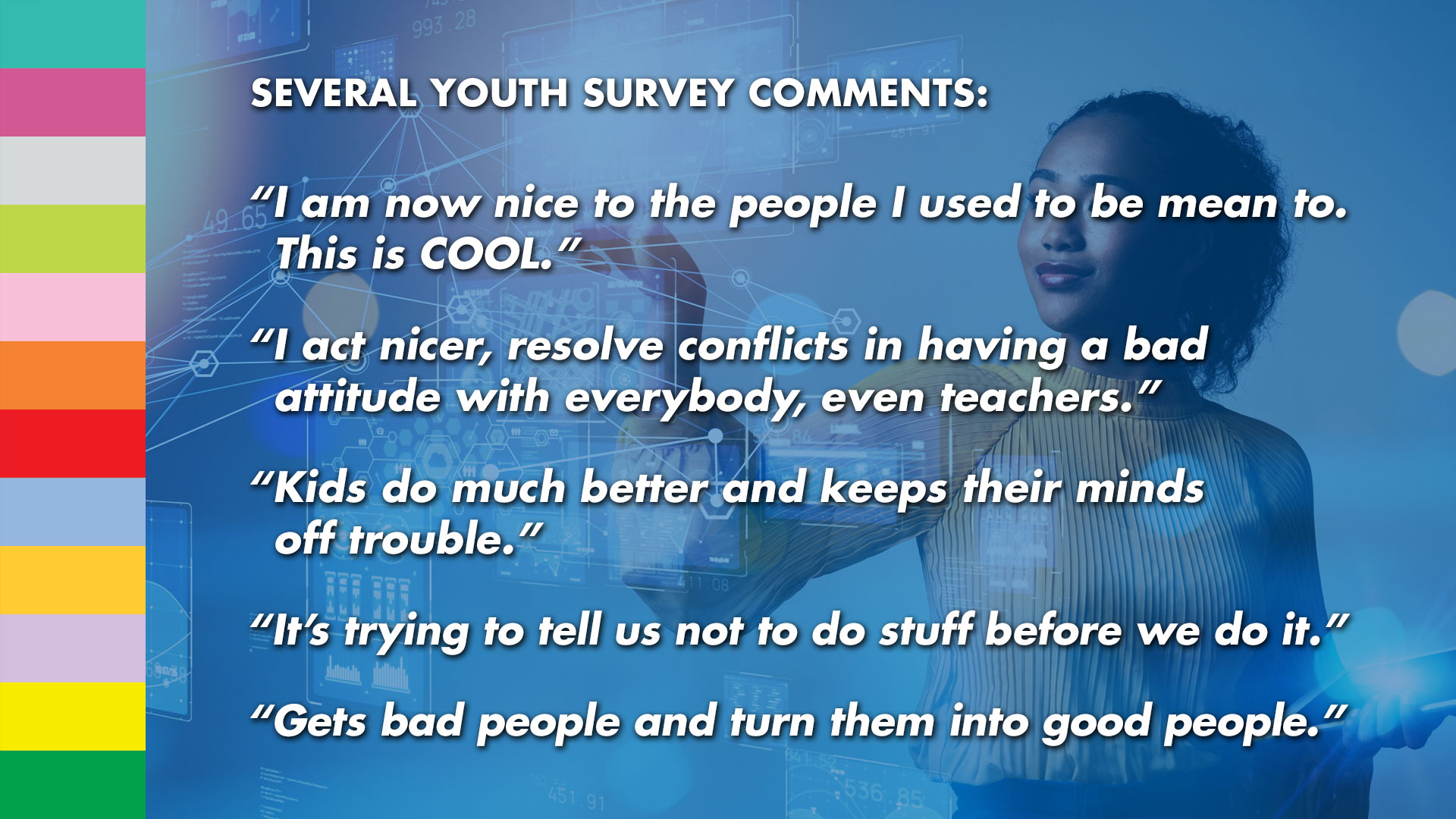
“I am now nice to the people I used to be mean to.”
Out of thousands of survey responses, the above quote is Elaine Parke‘s favorite, and says it all. Peace and getting along better with others doesn’t get any better than that.
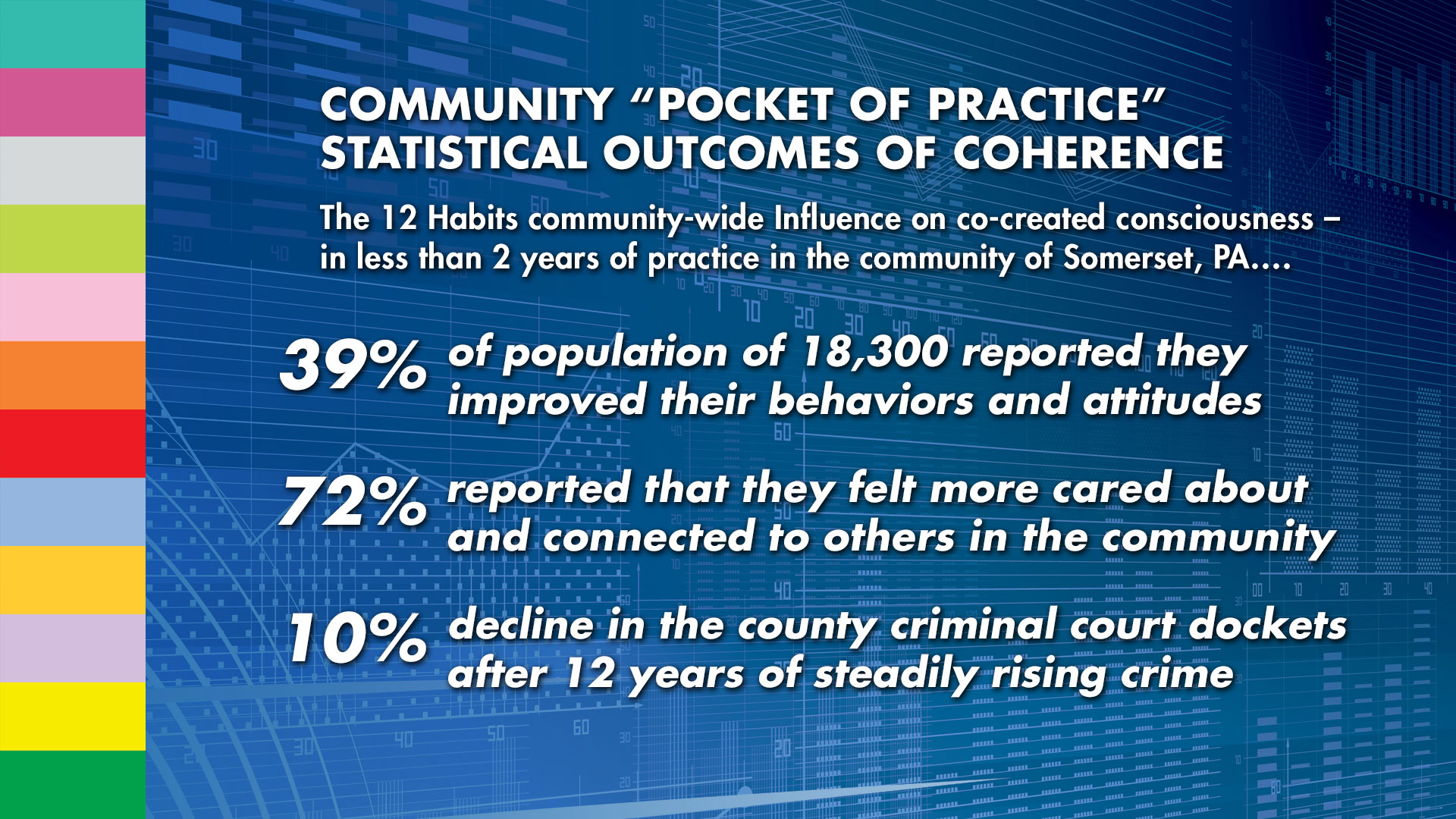
No other movement for peace, improved human relations, community-building and even mental health has amassed the amount of evidence that their models work to actually modify behaviors among individuals of all ages in broad populations.
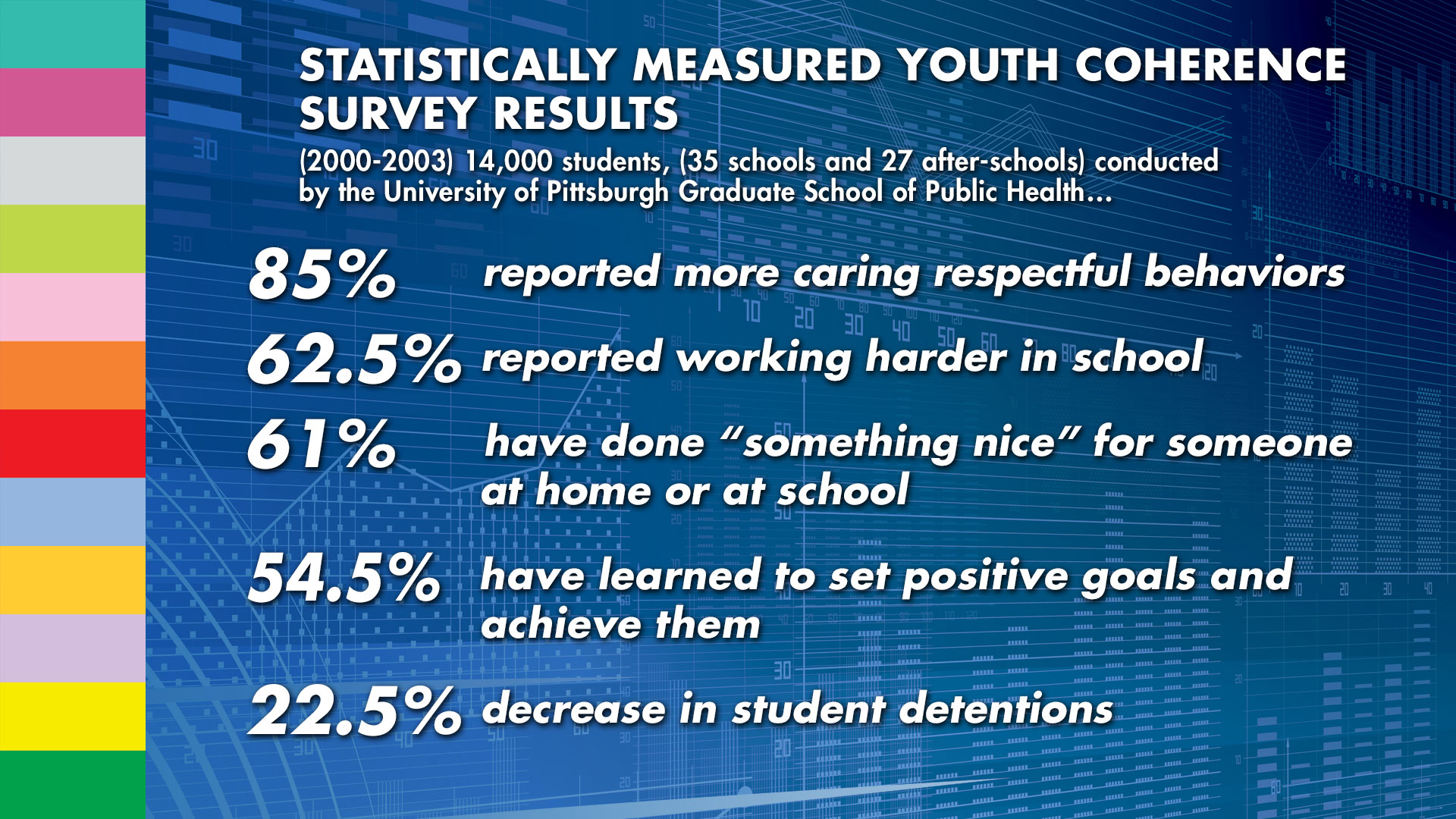
The nine existing independent studies* of the 12 Habits model were devised to circumvent this issue by combining pre and post data collection with on-going “self-reporting” surveys, taken among students and staff. Over all nine studies, the positive changes in pre and post data collection matched the generally positive self-reporting of students and staff.
Transformations grow through affirmations
Yes, there are students who will say they “hate” the peacemaker habits project in the early months. As the positive permission climate begins to take hold of the culture, the transformation begins to grow through affirmations combined with expectations. Being a peacemaker becomes “cooler” than being outside the growing peace culture group.
There are existing templates for the pre-post data collection and for the student, teacher surveys. They can be customized to each school’s protocols and expectations. The measured outcomes begin to improve from the beginning as the culture grows.
Our data shows that in most installations, the 12 Habits of Peacemakers will grow outside the school and into the community where the students reside. Merchants post 12 Habits posters, juvenile probation officers use the themes, home materials are provided and so on.
* Prior independent study hosts include:
1. University of Pennsylvania at Indiana,
2. The London Institute for Social Inventions,
3. Highmark, Blue Cross-Blue Shield,
4. The University of Pittsburgh Graduate School of Public Health,
5. Alfred State University,
6. The Pennsylvania State Board of Education,
7. The Pennsylvania State Department of Health,
8. The WV State Board of Education, and
9. The Board of the Morgan County WV Home School Association.
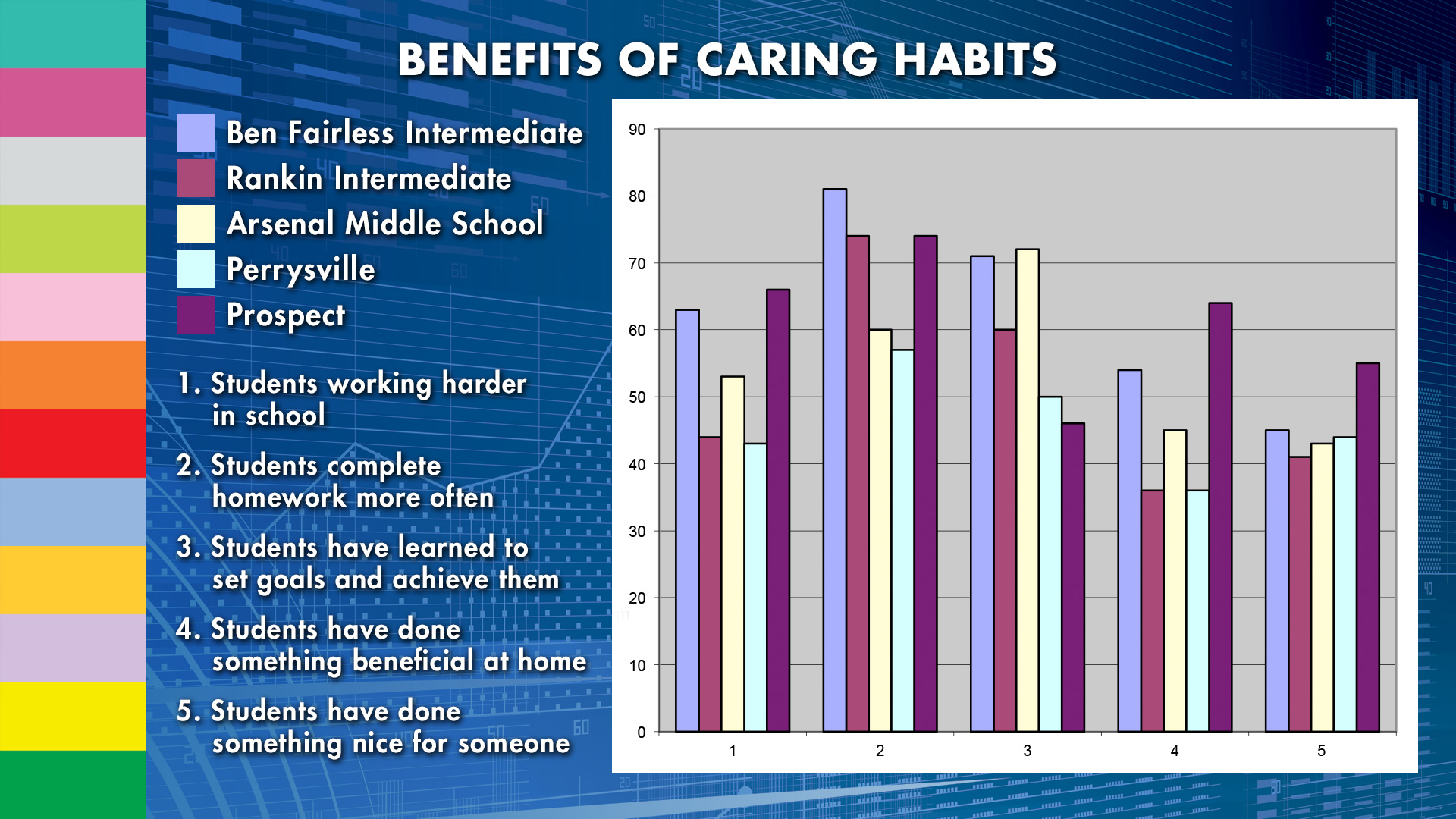
– New Graph Image here. –
Partial list of specific research references:
Kaufmann, J.A. PhD (2004) A methodologic evaluation study of the Caring Habit of the Month program: Cognitive, affective and behavioral effects of an anti-violence program in middle school children, Pittsburgh, PA: University of Pittsburgh, Graduate School of Public Health.
Seigle, Janice, E., (2000) – 12 Caring Habits Pre-Post Test Results in Aliquippa Middle School, published in Highmark Quarterly Review Highmark Blue Cross Blue Shield,
Shumer, R. PhD (2003) Evaluation of character education in Pennsylvania, year III. Caring Habit of the Month Adventure: Pittsburgh Public Schools, unpublished report prepared for the Pennsylvania Dept of Education.
Shumer, R. PhD (2003) Evaluation of character education in Pennsylvania, year IV. Caring Habit of the Month Adventure: Pittsburgh Public Schools, unpublished report prepared for the Pennsylvania Dept of Education.
Denk, Barry, PhD. (1993) Pennsylvania Downtown Center, An Assessment of Caring Habits in Communities, Published, Pennsylvania Downtown Centers Annual Report..